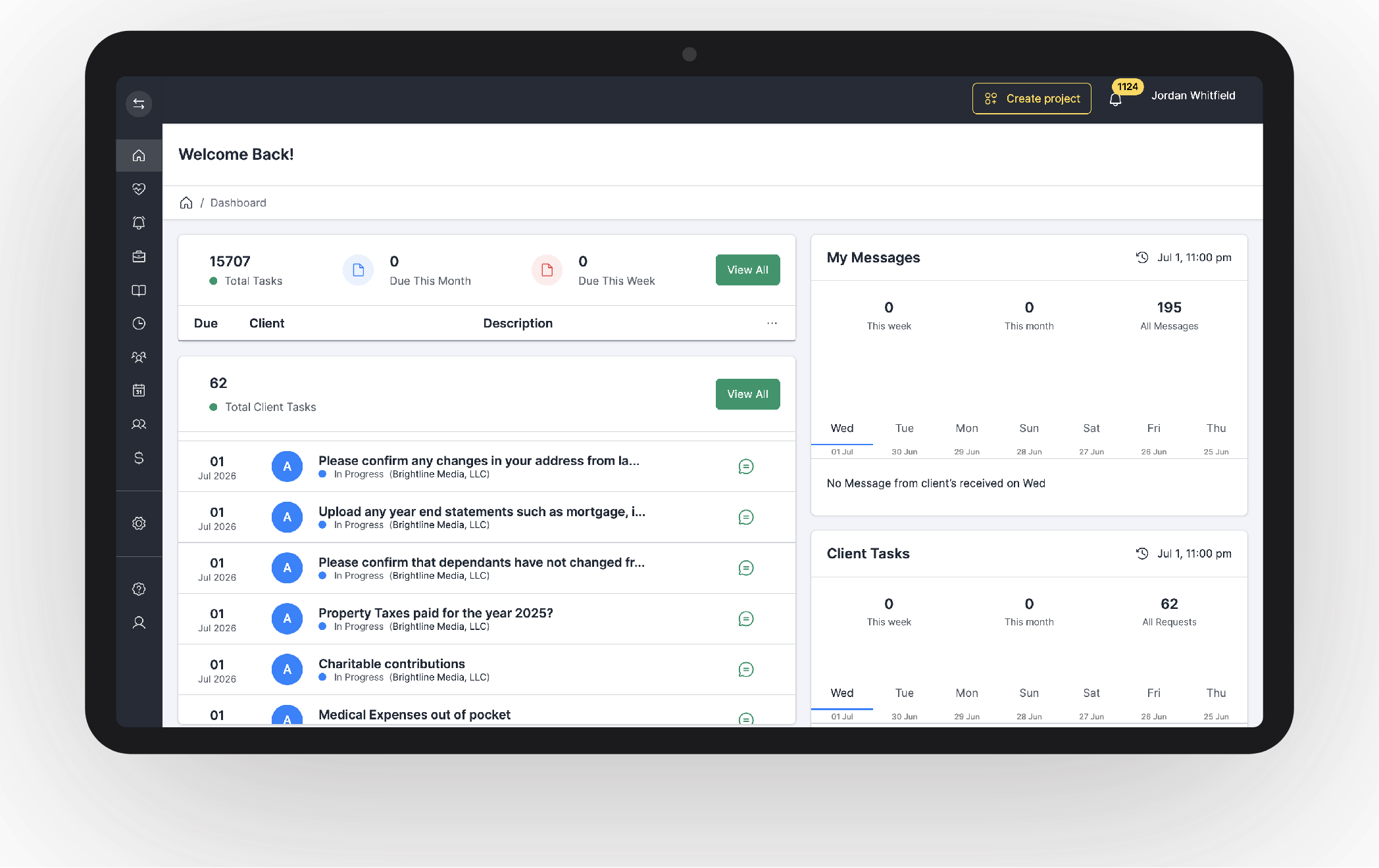
AccurekFirm dashboard — the whole operation on one screen
Accurek is a single operating system for accounting firms — built to replace a stack of disconnected tools, and wired directly into the systems they already trust. Twenty-plus modules, a secure client portal, and a two-way QuickBooks integration underneath all of it.
This one is measured in surface area and load, not in a single headline percentage — the win was consolidation.
Accounting firms run on a patchwork: QuickBooks for the books, spreadsheets for tracking work, email and chat for client back-and-forth, shared drives for documents, separate systems for scheduling and passwords. None of it talks to each other, and the cost lands on the firm every single day — work slips through the cracks, staff re-key data between apps, and the client's experience is fragmented.
Month-end close was the sharpest edge. Reviews were ad-hoc: every reviewer did it differently, with no reliable audit trail of what had actually been checked. QuickBooks data flowed one way only, so chasing receipts, transaction answers and missing documents happened over email — and got lost there. And the repetitive work that should have been automatic (recurring projects, reminders, reconciliations, health checks) was eating into billable time.
We mapped the full lifecycle of a client engagement — intake through month-end review — and designed around how firms actually work, not around generic project-management patterns.
A deep OAuth integration syncing 17+ entity types and every major transaction type, so the books and the firm's operations stay in lockstep instead of drifting apart.
A hierarchical role system — owner, admin, manager, employee — plus a separate secure client portal, both enforced by fine-grained per-resource access control.
Syncs, health checks, reports and reminders run asynchronously in the background with real-time progress, so heavy work never blocks the interface.
Recurring projects, month-end close cycles, reminders, transaction sharing and document syncs all run on schedule, without anyone remembering to trigger them.
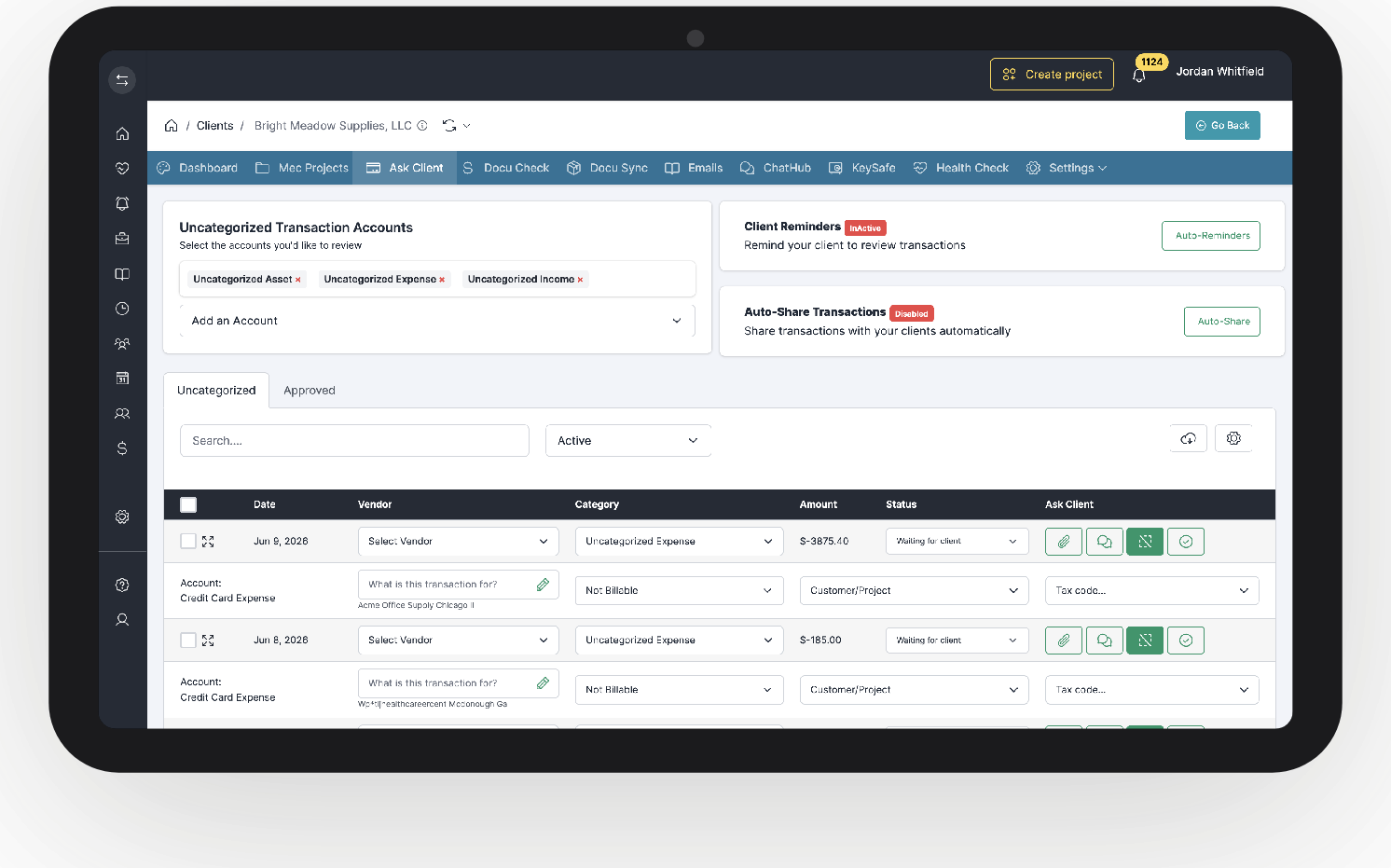
Each one connects to the same QuickBooks data and the same client record — that's the whole point of it.
Two-way OAuth integration syncing clients, vendors and transactions — reclassify and edit directly from Accurek.
Continuous analysis that flags unreconciled, uncategorized and anomalous data before a human has to go looking.
Structured MEC cycles with 18+ review points and a complete audit trail of what was checked, by whom.
Clients complete tasks, upload documents, answer questions and chat — without an email thread in sight.
OCR-backed receipt and invoice collection, plus automated verification that the required documents actually exist.
Share, review, approve and resolve QuickBooks transactions with the client in a single conversation.
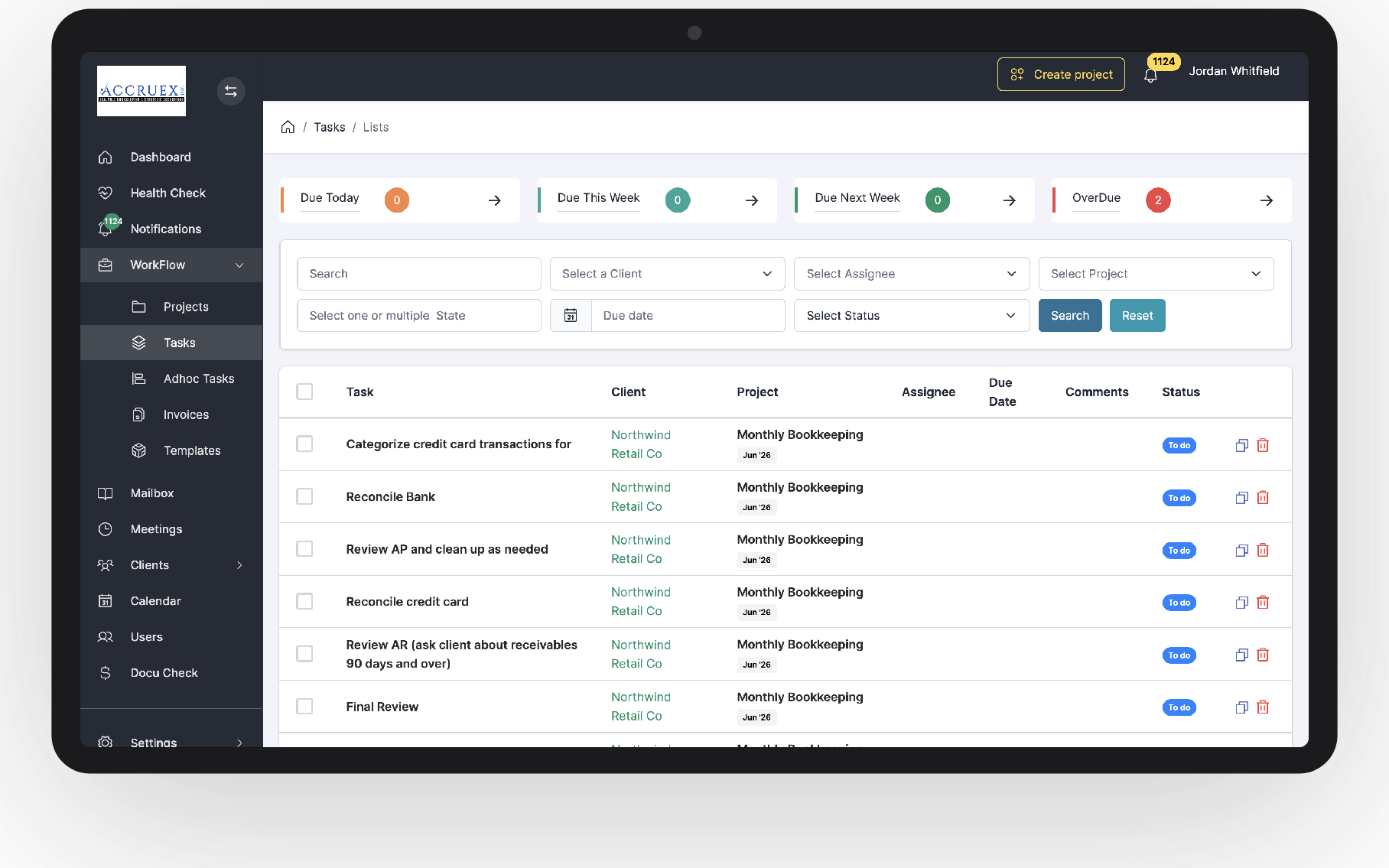
Recurring projects, templates, subtasks, reminders and bulk actions driving the whole firm from one list.
Client booking against real availability, plus a secure vault for requesting and storing credentials.
Real-time chat, Gmail and Outlook integration, and a multi-channel notification engine on top.
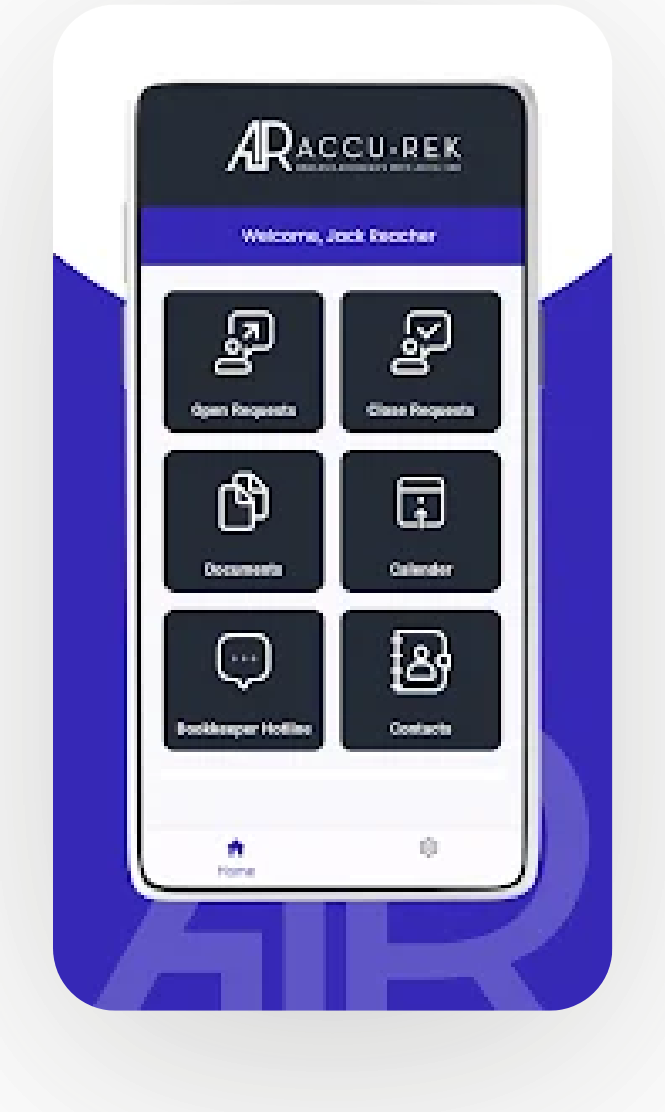
The Accu-Rek mobile app extends the platform to phones, so neither side has to open a laptop to keep moving.
See what's due and act on it in a tap.
Reports and schedules always on hand.
A direct line to the team, plus contacts.
Firms now manage clients, review financials, run month-end close, collect documents and communicate from a single application wired directly into QuickBooks. Month-end review became a standardised, repeatable process with a clear record of every review point checked. The portal gives firms a modern, branded way to collaborate — no more email ping-pong.
Underneath, recurring projects, reminders, health checks and document syncs run automatically, and a background-processing architecture absorbs the heavy syncs and the largest clients without slowing the interface down.
We handled the full journey: understanding how the business actually works, designing the workflows, integrating the systems it depends on, and building software that holds up under real data and real load.
We build complex platforms and connect them to the tools clients already rely on, rather than asking them to abandon those tools.
We design around how a business actually runs, so the software removes friction instead of adding a new place to check.
We engineer for performance, reliability and security up front, so what ships scales with the client instead of against them.
Consolidation projects live or die on the integrations. Tell us what your operation actually depends on and we'll tell you what it takes to bring it into one place.